
Buying Off-Plan in Spain: What International Buyers Should Know
A clear guide to buying off-plan in Spain. Payment stages, bank guarantees, legal protections, and what to watch out for to ensure a safe purchase.
What Off-Plan Means
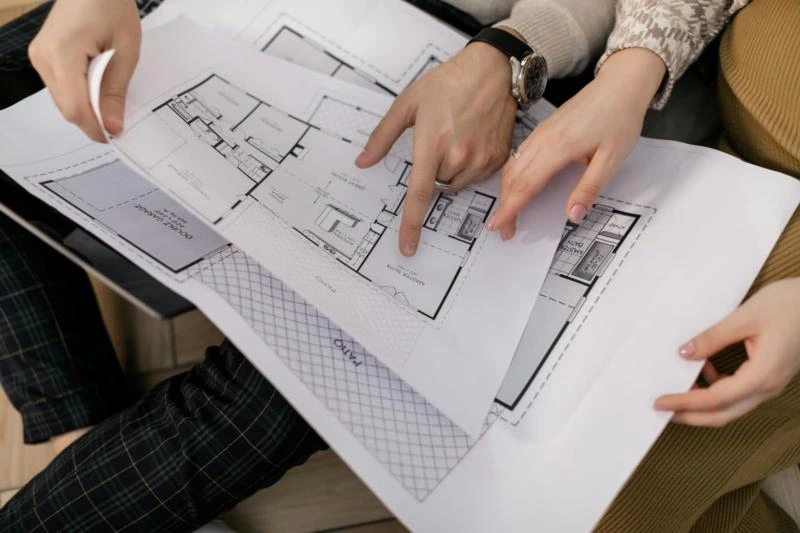
Buying off-plan means purchasing a property before — or during — its construction. You commit to a specific plot and villa design, make staged payments as the build progresses, and receive the keys when construction is complete.
In Spain, off-plan purchases are regulated by a framework designed to protect the buyer. Understanding this framework is important, because the protections are real — but only if you know what to ask for.
Why Buy Off-Plan?
There are genuine advantages to buying before a property is built.
Price: Early buyers typically secure the best plots and the lowest prices. As a development progresses and demand grows, prices tend to increase. At Omala Residences, for example, Phase 1 villas are priced from €310,000 — later phases at equivalent positions are expected to be higher.
Choice: You pick your exact plot, orientation, and — in many cases — can make selections on finishes, layouts, and optional extras before construction begins. Once a villa is built, you take what is there.
Modern standards: New-build properties in Spain must comply with current building codes, including energy efficiency standards. An off-plan villa in 2026 will be built to the CTE (Código Técnico de la Edificación) and will achieve a far higher energy rating than a resale property from 2006.
Payment spread: Rather than paying the full amount at once, you make staged payments over the construction period — typically 12–24 months. This allows time to arrange finances and reduces the pressure of a single large transaction.
The Typical Payment Structure
Spanish off-plan purchases follow a well-established structure. While exact terms vary by developer, the pattern is consistent:
Stage 1: Reservation
A reservation fee of €6,000–€10,000 secures your chosen plot and villa type. This amount is deducted from the purchase price. At this stage, the developer takes the property off the market and prepares the private purchase contract.
Stage 2: Private Purchase Contract (Contrato Privado de Compraventa)
Within 30–60 days of reservation, you sign the private purchase contract. A further payment — typically 20–30% of the purchase price minus the reservation — is made at this point.
This is the most important document in the transaction. It sets out the property specification, the agreed price, the completion date, the payment schedule, and the penalties for delay on either side.
Stage 3: Construction-Stage Payments
Depending on the developer, there may be additional payments tied to construction milestones — for example, when foundations are complete, when the structure is finished, and when the property is ready for fitout.
Not all developers use milestone payments. Some collect the deposit and then the balance at completion, with nothing in between.
Stage 4: Completion (Escritura)
When the property is finished and has received its licencia de primera ocupación (first occupation licence), you make the final payment — the remaining balance of the purchase price. The signing takes place before a Spanish notary (notario), and the property is registered in your name at the Land Registry (Registro de la Propiedad).
Your Legal Protections
Spain introduced strict buyer protections for off-plan purchases following the property crisis of 2008–2012. These protections are now enshrined in law.
Bank Guarantee (Aval Bancario)
This is the single most important protection. Under Spanish law (Ley 38/1999 and subsequent amendments), any developer selling off-plan must guarantee all advance payments either through a bank guarantee (aval bancario) or an insurance policy.
What this means in practice: if the developer fails to complete the property — for any reason — the bank or insurer is legally obligated to return all payments you have made, plus interest.
Always verify that your deposit and stage payments are covered by a bank guarantee or equivalent insurance. Your lawyer should confirm this before you sign the private purchase contract. A reputable developer will provide this documentation proactively.
Building Licence (Licencia de Obra)
Before selling off-plan, the developer must hold a valid building licence from the local municipality. This confirms that the project has planning permission and complies with urban development regulations.
First Occupation Licence (Licencia de Primera Ocupación)
This certificate is issued by the municipality once the property is complete and confirms that it has been built according to the approved plans and meets safety and habitability standards. Without it, you cannot legally connect utilities or register the property.
Ten-Year Structural Warranty
Spanish law requires developers to provide a 10-year insurance policy covering structural defects (cimentación y estructura). This is backed by an insurance company, not by the developer — so it survives even if the developer ceases to operate.
In addition, there is a 3-year warranty for defects affecting habitability (waterproofing, insulation, pipework) and a 1-year warranty for cosmetic finishing defects.
The Role of Your Lawyer
Engaging an independent, English-speaking lawyer (abogado) is essential — not optional. Your lawyer will:
- Review and negotiate the private purchase contract
- Verify the developer’s licences, permits, and bank guarantees
- Conduct a property search at the Land Registry
- Ensure the property is free of charges, liens, and encumbrances
- Attend the notary signing on your behalf if you cannot be present
- Manage the registration and tax payments after completion
Budget approximately €1,500–€3,000 for legal fees. It is money well spent.
Important: Use a lawyer who is genuinely independent of the developer. A developer’s in-house lawyer works for the developer, not for you.
Taxes and Additional Costs
When buying a new-build property in Spain, expect the following costs on top of the purchase price:
IVA (VAT): 10% of the purchase price. This is the standard rate for new residential property in Spain.
AJD (Stamp duty): 1.5% in the Murcia region (rates vary slightly by autonomous community).
Notary fees: Approximately €600–€1,200, based on the property value.
Land Registry fees: Approximately €400–€800.
Legal fees: €1,500–€3,000.
Total additional costs: Approximately 12–14% on top of the purchase price. For a villa at €400,000, budget around €48,000–€56,000 in additional costs.
Snagging and Defect Inspection
Before or immediately after completion, you have the right to inspect the property and identify any defects or unfinished items — a process known as snagging (or “lista de repasos” in Spanish).
Common snagging items include paint touch-ups, tile alignment, door and window adjustments, plumbing connections, and appliance function checks.
Practical advice: Hire a professional snagging inspector if possible. They cost approximately €200–€400 and will identify issues that an untrained eye would miss. Many defects are easily fixed at this stage but become expensive to rectify later.
The 1-year cosmetic warranty covers items identified during this period. Document everything in writing and send it to the developer formally.
Timeline Expectations
Off-plan construction in Spain typically takes 12–24 months from purchase to completion. Delays are possible — weather, material supply, regulatory approvals — and a buffer of 2–3 months beyond the stated completion date is realistic.
Your private purchase contract should include a clause specifying the completion deadline and the consequences of delay. If the developer fails to deliver within the agreed timeframe (plus any contractual grace period), you are typically entitled to cancel and receive a full refund of all payments made, including interest.
Red Flags
While the vast majority of off-plan transactions in Spain proceed smoothly, there are warning signs to watch for:
- Developer refuses to provide bank guarantees for advance payments
- No building licence in place at the time of sale
- Pressure to pay large sums directly to the developer’s operating account rather than a guarantee-backed account
- Vague or missing specifications in the purchase contract
- No independent legal representation for the buyer
- Developer has a history of failed or abandoned projects (your lawyer should check this)
A reputable developer will welcome your due diligence. If asking reasonable questions generates resistance, that is itself a signal.
Buying Off-Plan at Omala Residences
Our process at Omala Residences follows the standard framework described above, with full bank guarantees on all advance payments, transparent pricing, detailed specifications, and support from our team throughout the process.
We work with several independent English-speaking lawyers in the region and can provide introductions — though the choice of lawyer is always yours.